
Which lifting gear suits which load? Whether it is a machine part, steel sheet or round bar: between the crane or hoist and the load you need suitable slinging or load handling equipment. Chain slings, round slings, lifting magnets and lifting clamps work on quite different principles. This guide shows what the four types of lifting gear can do and what they are intended for. You will find the range under lifting devices and gear. This article is a selection guide – the manufacturer's operating instructions apply for use and inspection.
Four types of lifting gear, four principles
The four types differ above all in how they hold the load:
- Chain sling: is attached to the load's lifting points and holds via hooks. According to the manufacturer to DIN EN 818-4, grade 8.
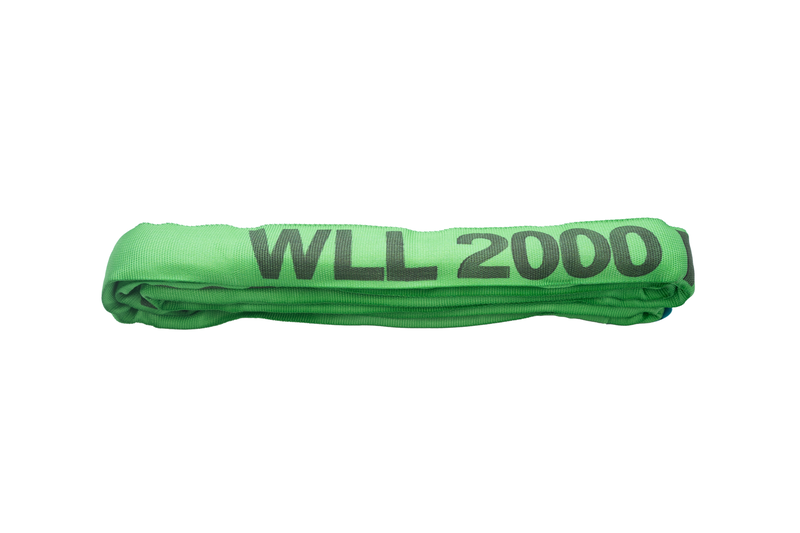
- Round sling: wraps around the load with a textile tube, made of polyester with a double sleeve according to the manufacturer.
- Lifting magnet: holds ferromagnetic material such as steel by magnetic force, without lifting points.
- Lifting clamp: grips sheets mechanically at the edge and holds them with a clamping jaw.
Which principle fits depends on the shape, material, weight and surface of the load. The basis for the choice is your company's risk assessment.
The four types in detail
All products shown are made by Dolezych; the data is taken from the manufacturer's information.
- Chain sling: The 2-leg sling chain; GS hook; NG 8-8 complies with DIN EN 818-4 and has a nominal chain size of 8 and grade 8. Each leg is 1,000 mm long and fitted with a GS-DD hook. According to the manufacturer, the working load limit is 2,800 kg at an angle of inclination of 0° to 45° and 2,000 kg at 45° to 60°.
- Round sling: The Round sling DoForce2 double sheath WLL 2,000 kg, 1000 mm is made of polyester (PES), has a double sheath and is manufactured to EN 1492-2. Nominal length 1,000 mm, colour green, operating temperature according to the manufacturer from -40° to 100°.
- Lifting magnet: The DoLast permanent lifting magnet Do 2/T, 100 kg load capacity uses neodymium magnets and needs no power supply. According to the manufacturer it carries 100 kg on flat and 30 kg on round material, round material from 50 to 300 mm. Standard DIN EN 13155, maximum operating temperature 80°, with handle.
- Lifting clamp: The DoLast lifting clamp Do 81 T, 500 kg load capacity is designed for vertical lifting. Load capacity 500 kg, minimum load 50 kg, jaw opening 0 to 15 mm. It has a shackle eye and a safety lock, but no torsion spring.
Reading the load capacity correctly
The load capacity of lifting gear is not one fixed figure for every situation. The manufacturer's data makes that clear:
- Angle of inclination with chains: The wider the legs are spread, the lower the permissible load. For the chain shown, it drops from 2,800 kg to 2,000 kg once the angle exceeds 45°.
- Shape of the load with magnets: The lifting magnet carries considerably less on round material than on flat material, here 30 kg instead of 100 kg.
- Minimum load with clamps: Besides the maximum load, the lifting clamp states a minimum load of 50 kg. Observe this value: what applies to lighter loads is set out in the manufacturer's operating instructions.
- Slinging method with round slings: Which load capacity applies to which slinging method is shown on the round sling's label and in the operating instructions.
Typical applications
Sheet metal in the workshop
Individual steel sheets can be picked up vertically with a lifting clamp, provided the sheet thickness is within the jaw opening. Flat steel parts up to the stated load capacity can also be moved with a lifting magnet, without the need for lifting points.
Machine parts in production
Components with eyes or lifting points are lifted with a chain sling. If a component has no lifting points, it can be wrapped with a round sling. Whether the round sling suits the surface of your component is something to check against the manufacturer's information.
Round material in the warehouse
Steel tubes and bars within the magnet's diameter range can be moved with the lifting magnet. Note the lower load capacity on round material. For bundles or larger loads, round slings or chains are suitable.
Frequently asked questions
Does a permanent lifting magnet need power?
No. The Do 2/T uses neodymium magnets and is operated by a handle. It is only suitable for ferromagnetic material such as steel.
When do I use a round sling instead of a chain?
When the load has no lifting points and has to be wrapped. If it has suitable lifting points, the chain is hooked in directly. Which attachment method is permitted and which load capacity then applies is stated in the operating instructions.
How often do I have to inspect lifting gear?
Visually check lifting gear for damage before every use. For regular inspections, the manufacturer's information in the operating instructions and your company's own rules apply.
How to choose the right lifting gear
- Determine the weight, shape and material of the load.
- Clarify whether lifting points are available or the load has to be wrapped.
- Check the load capacity for your specific slinging method, load shape or angle of inclination.
- Pay attention to marking, standard and operating temperature.
You will find all lifting gear under lifting devices and gear. If you have questions, call us on +49 2237 628095-00, Monday to Friday from 9 am to 5 pm. The manufacturer's operating instructions always apply for use and inspection.